
Experts say companies wanting to launch IPOs will have to scale back their expectations given the fall in valuations.

The size of the Indian financial services market could touch around $340 billion in the next few years.

In the excitement over the allocation of bank licences for the private sector, a new category of licence offered by the Reserve Bank of India (RBI) last year went almost unnoticed. That was when the RBI consolidated the rules for prepaid payment instruments (PPI), popularly understood as e-wallets or gift cards. In the process, the regulator has fast-forwarded a bottom-up card usage industry in India that is completely different from the world of bank-linked credit and debit cards.

E-commerce platform Snapdeal is looking at filing its Draft Red Herring Prospectus (DRHP) in the next few weeks to launch an initial public offering in first half of next year, according to sources. Sources close to the development said the company is looking at a $250 million (around Rs 1,870 crore) IPO that could value Snapdeal at about $1.5-1.7 billion. Snapdeal is looking at filing the DRHP in December-January time frame, and launch the IPO in the first half of 2022 after the necessary approvals, they added. One of the sources said the founders will not be selling shares as part of the IPO, and major shareholders are also expected to hold onto their shares.

The government has amended rules of the Foreign Exchange Management Act (FEMA), paving the way for up to 20 per cent foreign direct investment in the insurance behemoth LIC. The government is planning to dilute its stake in LIC through the the Initial Public Offering (IPO). LIC in February had filed the Draft Red Herring Prospectus (DRHP) before the markets regulator Sebi for the IPO.

Falling valuations, slowing funding rounds and faltering investor sentiment seem to have prompted many start-ups to lay off employees in a bid to conserve cash. The latest to do so is SoftBank-backed Cars24, a leading e-commerce platform for pre-owned vehicles, which has laid off over 600 staff, according to sources in the know. The move, they said, is aimed at conserving cash amid cautious investor sentiment and a slowdown in funding.
Open Network Digital Commerce (ONDC) has expanded its pilot to 15 more cities. This comes at a time when it plans to begin operations next month. Snapdeal has also signed the onboarding agreement with the network and will debut on it next month. On Monday, ONDC expanded to Noida, Faridabad, Lucknow, Bijnor, Bhopal, Chhindwara, Kolkata, Pune, Chennai, Kannur, Thrissur, Udipi, Kanchipura, Pollachi, Mannar and Ramnathpuram.

PhonePe wants to dethrone its Alibaba and SoftBank-backed rival, Paytm, claiming that additional capital that Walmart will bring to the table will help it grow much faster

A long and bitter funding winter in the start-up world is beginning to take its toll on start-up advertising across properties. Earlier this week, Mastercard replaced Paytm as the title sponsor for all international and domestic cricket matches organised by the Board of Control for Cricket in India (BCCI). But this is just one part of the story. The other side is that organisers of high-impact shows and events on Hindi general entertainment channels, too, are feeling the winter chill.

70 per cent of surveyed respondents have experienced job related issues in the past 3 months.

172 firms participated in the final placement process.

While players like Paytm, MobiKwik, and PhonePe allow you to buy gold for Rs 1, Amazon Pay has kept the minimum amount at Rs 5. Digital gold is essentially an avenue for investing in physical gold.

The expected interest rate hike in the US and the resultant volatility in the domestic secondary market could play a dampener to the over Rs 2-trillion initial public offering (IPO) pipeline in 2022. IPOs in 2022 look promising, with as many as 35 companies holding the Securities and Exchange Board of India's approval to raise roughly Rs 50,000 crore. Another 33 companies are waiting for the regulator's nod to raise around Rs 60,000 crore next year.

Byju's is set to promote its chief operating officer (COO) Mrinal Mohit to a bigger role, including leading the India operations, according to people familiar with the matter. This is because Byju Raveendran, founder and chief executive officer (CEO) of the edtech giant - which is valued at $22 billion - is planning to focus on global expansion and acquisitions. Among the global regions, Raveendran may look at markets such as the US and the Middle East.

'Overtightening of monetary policy by central banks and the spread of new Covid variants, which may force governments to restart lockdowns or restrict mobility.'

Despite strong AUM growth, MFs lag behind other popular investment avenues. MFs received only 6 per cent of total household savings in 2021-2022.

Ajit Mishra, vice president, Research, Religare Broking, answers your stock market queries.

Total investments in the first six months of 2017 was a record $11.34 billion

Within two days, the business school had 108 recruiters making 370 domestic and international offers, including 23 new final recruiters with an average salary of Rs 25.08 lakh.

The Reserve Bank of India (RBI) on Thursday extended the card-on-file (CoF) tokenisation deadline by six months to June 30, 2022, in view of various representations received from industry bodies. Card-on-file, or CoF, refers to card information stored by payment gateway and merchants to process future transactions. The earlier deadline was December 31, 2021. "In light of various representations received in this regard, we advise...the timeline for storing of CoF data is extended by six months, ie., till June 30, 2022 and post this, such data shall be purged," RBI said in a notification addressed to all payment system providers and payment system participants.

Initial share sales are set to dazzle the Dalal Street in 2022 too as companies are expected to garner up to Rs 1.5 lakh crore in the New Year, continuing with the bullish momentum after 2021 turned out to be the best IPO year in two decades for the Indian market. Excessive liquidity and increased retail investor participation ensured a persistent euphoria in the Initial Public Offer (IPO) space wherein companies mopped up more than Rs 1.2 lakh crore this year even as pandemic gloom shadowed the broader economy. In 2022, the higher amount of funds through the primary market will be largely driven by the mega IPO of state-owned Life Insurance Corp (LIC).

Star Health and Allied Insurance's Rs 7,250-crore initial public offering (IPO), the third largest this year and eighth largest ever, just about managed to make it despite a poor response from investors, garnering just 79 per cent subscription, forcing the investment bankers to prune offer for sale (OFS) component. This is the second large offering after digital payments major Paytm this year to receive a lukewarm response from investors, a sign that despite the IPO frenzy investors are discerning when it comes to pricing. As Star Health didn't meet the profitability criteria, its IPO required a mandatory 75 per cent subscription from qualified institutional buyers (QIB).

Mutual funds, as experts and custodians of another set of retail investors' savings, play a speculative game they are neither supposed to nor equipped to do, cautions Debashis Basu.

Fundraising activity in the upcoming financial year 2022-23 may even surpass FY22 when 52 Indian companies raised a record Rs 1.11 trillion via initial public offerings (IPOs). According to a note by PRIME Database, 54 companies (including LIC) plan to raise Rs 1.4 trillion and currently hold the Securities and Exchange Board of India's (Sebi's) approval. Another 43 companies, the note said, are looking to raise about Rs 81,000 crore but waiting for Sebi nod.

The race to get a New Umbrella Entity (NUE) licence for digital payments may get crowded. As many as six consortiums are said to be in the fray to apply for an NUE licence, which would create a for-profit National Payments Corporation of India (NPCI)-like body for retail payments. A consortium led by Financial Software and Systems (FSS), a leading provider of payment products and payment processor, is in talks and may file an application to the RBI for an NUE license, said sources aware of the development. The other constituents of this group include Indian Bank, Central Bank of India, India Post Payments Bank, National Bank for Agriculture and Rural Development (Nabard), and a few small finance banks.

After a stellar November that saw companies mop up over Rs 36,000 crore from the primary market via initial public offers (IPOs) and offers for sale (OFS), the current month, analysts said, will test investor's willingness to stay on with their investments as the one-month mandatory lock-in period for anchor investors begins to loosen. A note by Edelweiss Alternative Research suggests that in calendar year 2021 (CY21), 51 companies went public. Of these, 41 issuances' anchor selling dates are already over.

Unlike many peers in the VC space, LSE grad Juneja doesn't have an entrepreneurial background but is said to be strong in finance skills

'No government will forego the usage of data of this order and nor will any private concern.' 'Unless, of course, there are strong safeguards to privacy.' 'Which is why that nine-member Supreme Court bench could make or mar everybody's future,' says Devangshu Datta.
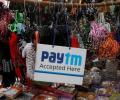
With the arrival of new players such as Amazon Pay, Google Tez and Flipkart's PhonePe, digital money companies are now changing their business pitch.

There has been a stellar rise for the Indian markets this far in calendar year 2021 (CY21) with the S&P BSE Sensex surging over 19 per cent. The gain in mid-and small-cap indices on the BSE has been sharper with both these indexes surging around 38 per cent and 54 per cent, respectively during this period. Rampant spread of Covid pandemic's Delta variant and the ensuing lockdown and mobility curbs across India, rising prices key commodities, including crude oil and its impact on inflation, possibility of tightening of policy stance by major global central banks, especially the US Federal Reserve (US Fed) have been some of the key headwinds that the markets successfully negotiated during this period.

'The mindset of people needs to change.' 'We still believe in accepting cash when we can do business with digital money as well.'

'In the business of money, where you are regulated, the liability lies on the head of the acquirer.' 'It is not a good thing when you cannot spot the risks.'

You will need a sharper eye for stock picking and a greater appetite for risk than most retail investors possess, recommends T N Ninan.

Almost all banks that issue contactless cards provide users with a 100 per cent liability cover.
These start-ups include high-growth companies such as Ola, Paytm, Lenskart, UrbanClap and Urban Ladder. Nearly half of these have gone on to raise follow-on funding, a key measure of success for start-ups. A few have become unicorns, the term for start-ups valued at $1 billion or more.

Blackstone, KKR, and Bain Capital, among others, are in the race for its general insurance arm, and Bandhan Bank, Bain, and Dabur Investments have shown interest for RCap's 51 per cent stake in the life insurance business.

Stock market minnows put up a stellar show in 2021 giving returns of up to 60 per cent amid Dalal Street dream run and are likely to continue sailing northwards in the New Year too. Trumping pandemic-induced uncertainties, the Indian equity market posted stunning gains this year achieving several feats and smaller stocks benefited the most from the strong momentum. From reaching the momentous 50,000-mark in January to scaling 61,000-level in October, the BSE Sensex had an epic journey this year.

With the Russia-Ukraine war roiling financial markets globally, the government may defer the mega IPO of LIC and wait for an opportune time to get the maximum value of its holding in the state-owned insurance behemoth, sources said. "It's a full blown war now so we will have to assess the situation for going ahead with the LIC IPO," a government source said. Finance Minister Nirmala Sitharaman, too, had indicated review of the IPO in view of the evolving geopolitical situation.

As if wanting to be an antidote to the coronavirus pandemic, the Indian stock market adorned carnival robes in 2021 with a tsunami of liquidity unleashed by global central banks coupled with supportive domestic policies and the world's largest vaccination drive sparking off a world-beating rally on Dalal Street, despite bouts of uneasiness over fizzy valuations. While the wider economy shuttled between recovery and relapse, dictated by multiple mutations of the virus, equity market benchmarks appeared headed in just one direction -- skywards. The dizzying upward journey has added a whopping Rs 72 lakh crore during 2021 to investors' wealth, measured as the cumulative value of all listed shares in the country, taking it to nearly Rs 260 lakh crore.

Readying its game plan, the Bengaluru-based e-commerce giant plans to renew talks of investments in various companies such as Swiggy, BookMyShow, Pepperfry, UrbanClap
 © 2026 Rediff.com - Advertise with us - Disclaimer - Privacy Policy - Sitemap - Feedback - About us - Terms of use - Grievances